Impact News
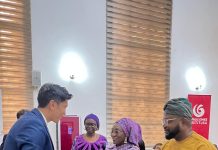
The Open Government Partnership (OGP) Nigeria’s stakeholders comprising of State and Non-State actors convened at the Sandralia Hotel Abuja On Monday to take the final shot at the National Action Plan III (NAP III).
In their various remarks, the National Coordinator, Dr. Gloria Ahmed encouraged participants to ensure a high-rated review of the document that centres around the brightness of Nigerians.
The stakeholders were urged to detach personal interests from the processes and first make it a point of duty to consider Nigerians and the wellbeing of the country.
The anti-corruption agenda is the main mantra of the outgoing president Muhammadu Buhari’s administration.
The government in July 2016, made a pact with the United Kingdom under the International Anti-Corruption Summit to fight the hydra-headed vice which remains a subject and bane in Nigeria’s developing history.
According to a report published by the Nigeria Extractive Industries Transparency Initiative (NEITI), the country loses between $15 Billion to $18 Billion annually to illicit financial flows through tax invasion, over-invoicing, cash smuggling, goods and money laundering, and use of offshore financial banking centres to steal and several other means of briberies and endemic corruption.
The fight against corruption birthed the Beneficial Ownership Register (BOR) – an award-winning innovative reform undergirded by OGP.
The BOR basically torchlights financial transactions in the country’s extractive industries, one of which is NEITI.
The outcome of the objectives of the aforementioned is that systematic corruption which drives unemployment, abject poverty, inequality, and inefficient or dilapidated infrastructure is identified, traced, and curbed.
The Nigerian Open Government Partnership National Action Plan III (OGP-NAP III) which will run from 2022-2024 is an improved version or an extension of the previous NAPS and it seeks to address more critical issues that the previous NAPs identified.
Again, just like other NAPs, the document has key areas of interest: Combating corruption and improving Citizens’ Participation.
In fact, it is a citizen-based draft that aims to increase every Nigerian’s overall standard of living.
The stakeholders also use the meeting to rate their performances on the previous NAPs, as the document, the NAP III was introduced.
The synergy also is to avoid duplication of arrangements at state levels. NAP III which has gone through deep scrutiny and bright deliberations by stakeholders is primarily focused on five thematic areas as Fiscal Transparency – which includes but is not limited to citizen participation, budget transparency, operationalization of open contracting and effective use of OCDS, extractive industries transparency and implementation of PIA tools, etc.
Among the thematic areas is the increasing access to information which includes but is not limited to implementing FOIA in all public institutions, environment and climate change which involves strengthening and implementing of Climate Change Act 2021.
The third is governance which includes but is not limited to the establishment of public registers, considerations to Beneficial Owners of Cooperate Entities inline with BODA (Beneficial Ownership Standard Data), Institutionalization of SERVICOM legally and otherwise and lastly, Civil Participation.
The objectives of this thematic area include ensuring the implementation and improving the PDM (Permanent Dialogue Mechanism), and the creation of forums, workshops, and conferences to harmonize state and non-state factors in order to deliberate on feedback on deliverables given topmost priority. Media objectivity and protection also form the bases of this theme.
The commitment and activities that conform to the Thematic Plan Areas for NAP III under Fiscal Transparency will be headed by MDAs. Commitment 1 will be championed by the Budget Office of the Federation alongside other state and non-state actors. While the objective is to ensure that budget planning approval, implementation, monitoring and reporting meets the need of the citizens, the second and third commitments will be steered by the Auditor General of the Federation and Bureau of Public Procurement (BPP) respectively.
The Extractive transparency commitment will be driven by the Nigerian Upstream Petroleum Regulatory Commission (NUPRC), alongside other state actors like NEITI, Downstream Petroleum Regulatory Authority (NMDPRA), etc. Non-state actors for this commitment include NNPC Limited, the Civil Society Legislative Advocacy Centre (CISLAC), etc.
The aim of this commitment addresses issues bordering on citizens’ engagement and access to information in the extractive industries.
Other MDAs that will head the steering committee of NAP III are the Ministry of Petroleum Resources (COMM 5), the Federal Ministry of Justice and Head of Service (COMM 6), the National Orientation Agency (COMM 7), the Federal Ministry of Environment (COMM 8), Corporate Affairs Commission (COMM 9), National Orientation Agency (COMM 10) SERVICOM Nigeria (COMM 11), and National Human Rights Commission (COMM 12).
Various technical sessions were held by MDAs and CSOs. Further deliberations, comments, questions and observations, with feedback from multiple groups’ presentations were also entertained to address specific interests.
The Meeting came to an end with the final validation of the NAP III document.